


The foreign and domestic crisis of the current dispensation is shaped by war.
Here is a report on how some of these wars began, how they are going, and how their effects abroad are also changing life at home.
There are a lot of memes in it. It should take you 15 minutes to read.
CONTENTS
In brief: how the wars have changed our world
The wars - Iran
The wars - Ukraine
The diplomatic deficit
The impact of the wars…
On the USA
Europe and Britain
NATO
Israel
A time of new priorities

In brief
The disastrous wars in Ukraine and in Iran have changed the political calculus in the USA, Europe and in Israel.
The international position of these powers has shifted significantly as a result, meaning the recognition of a new international situation is emerging.

This is a profound change from the post-1945 and post-Soviet settlement, demonstrating with extraordinary power the wisdom of the old saw that there is no difference between foreign and domestic policy.
Consequences have come home.
The wars - Iran
The “Purim War” in Iran was launched at the behest of the Israeli Prime Minister despite decades of White House opposition to this predictable misadventure.
Benjamin Netanyahu has pressed the United States to launch this war for almost fifty years. His campaign to have US and British diplomacy replaced by a war on “terror” began with the Yonatan Conferences in 1979.
If you would like to examine this claim in detail see my report here:

The Netanyahu Technique replaces the serious pursuit of diplomatic measures to secure peace with a simple trick.
Those you wish to destroy you call “terrorists”.1

To indicate this gimmick is not to exculpate the leadership of the Iranians, the Syrians, the Iraqis, Afghans, Libyans, the Palestinians, Lebanese and the Yemenis. It is to demonstrate how the United States was urged into a war that once again did not serve but severely undermined its national interest.
Some - not all - of the serious problems in these states have been attenuated if not created altogether by the decades of the War on Terror.
Iran has been weeks away from a nuclear bomb for over 30 years
Bluntly, Iran was not building a nuclear weapon2. The Iranians had made significant concessions which went beyond the former nuclear deal with Obama.
Reports at the time showed Kushner and Witkoff did not understand the nuclear issues and presented misleading information to Donald Trump to permission the war such as claims of material sufficient to “make 11 nuclear bombs”.

The claim of weapons of mass destruction to permission a war has been made before - in Iraq.
The head of Mossad, David Barnea, said the “protests” his agency had armed and ignited would take months to years to destabilise the regime.

There is no military solution to the crisis created by this war of Netanyahu’s choice, who faces imprisonment for serious crimes of political and financial corruption if or when he leaves office.
At present, if the war does not resume Netanyahu will be replaced by an opposition coalition which ran against the “October 7th government” led by him.
I have been called an antisemitic conspiracy theorist and a crank for stating the evidence3 now widely circulated in Israeli media that Netanyahu has serious questions to answer concerning his role in the events of October 7th and his long history of directing cash payments to Hamas - the group which initiated the attacks.

The limits of the disaster unleashed by the Iran war are still unknown. Any further escalation will most likely worsen the global economic situation. Possible effects could include widespread food shortages and even famines in the semi arid areas of Africa and Asia deprived of fertiliser. The economic crisis which has followed this war is now “structural” according to JP Morgan4, meaning it will continue for years and cannot be instantly resolved in the immediate aftermath of peace.
The wars - Ukraine
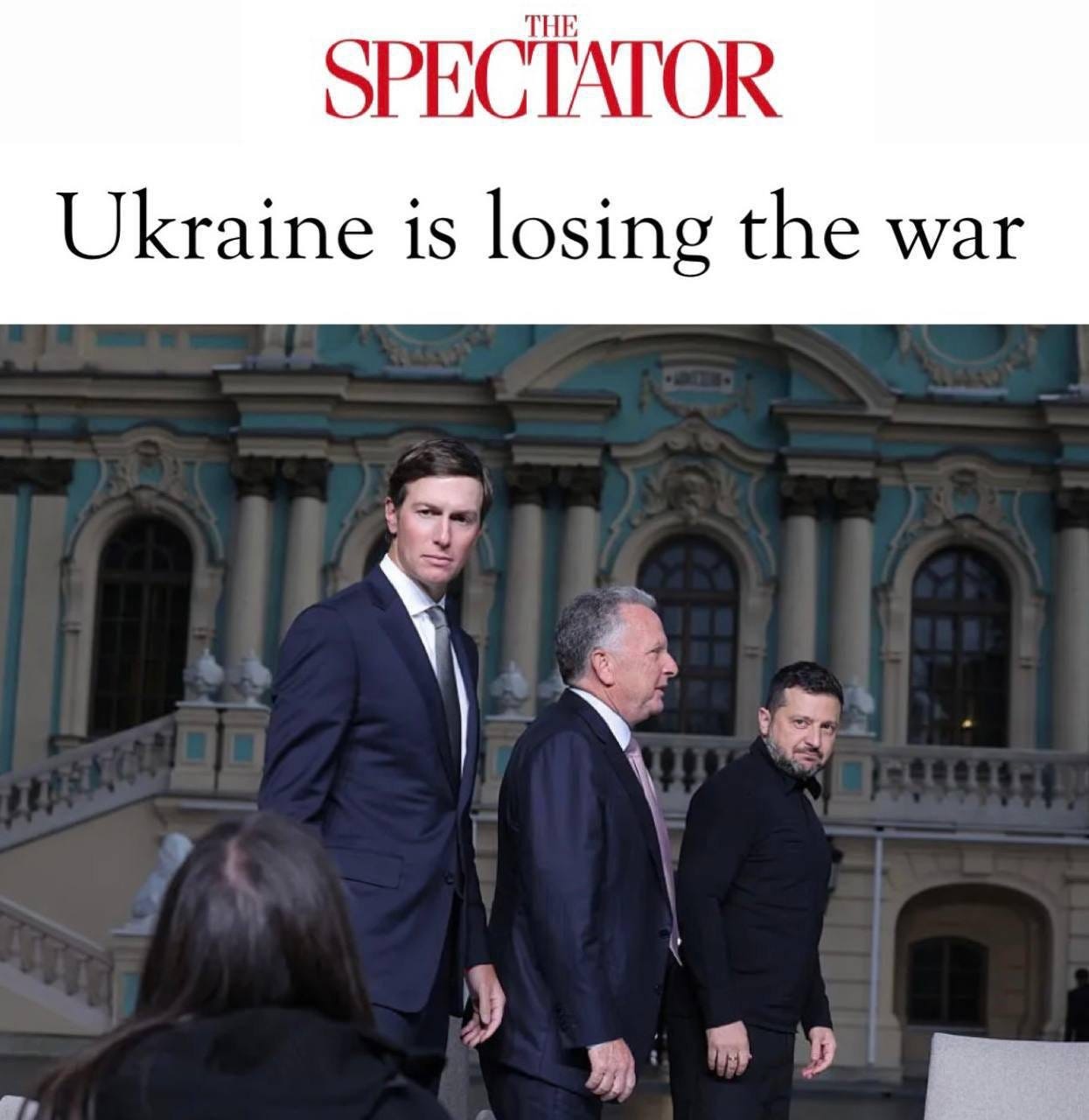
The war in Ukraine has been decided on the battlefield. The war was fought, by proxy and using Ukrainians, to destabilise Russia. This strategy has failed.
Combat operations are now dictating the diplomatic position towards a postwar settlement, which will very likely redraw the security arrangement in Europe.
The current talks to end the war have excluded the EU and Britain, as their interests are not served by any serious pursuit of peace. There appear to be no statesmen in Britain nor in the EU capable of reaching a rational settlement. This is the product of the dominance of the diplomatic and decision-making echelons by a cadre whose interests are served by decades of war and make belief.
The consquences of peace for the current dispensation in Britain and Europe will be severe. The narrative by which we are ruled will be sharply discredited, as will the politicians and pundits who manufactured public consent to this vast enterprise of damage, debt, deception and corruption. The legacy of this war may prove to be an epitaph for the politics, parties and personalities which urged its support on their populations.

The former consensus, which is a forced international consensus legitimised by propaganda, is in a terminal crisis. It has supplied all the problems we inhabit and has no solutions to any of them. This is one reason I supply in support of my conclusion that the liberal globalist system cannot survive the crises it has created. It has lost the capability to manage any of them to its own advantage.
The Russians will dictate the terms of the end of the war, whose military outcome was never in doubt by anyone who was sane enough to see this.
The US must for its own reasons consolidate its own position. The burden of European security has shifted to the Europeans, who have no one capable at present of shouldering it. This will change soon, and the Russians know that.
I do not expect there will be a full scale war with Russia. The sacrifice of the Ukrainian people (and likely their state in any meaningful sense) for this horrendous project is a crime which did not have to happen. In the aftermath of this war there will be sustained calls for justice. We shall see whether it is done.

The diplomatic deficit
Diplomacy is an art, and its difficulty lies in the balance of interests. To be a diplomat is to understand people who are not yours, and to recognise interests which you do not share. The purpose of diplomacy is to replace destruction with reliable mutual agreement. The goal is the survival of your nation into the coming centuries and the preservation of the national interest to the maximum.

When you have no credible diplomats you become incapable of agreement, as the accords you make are discredited by your subsequent actions and rhetoric.
We suffer from a severe diplomatic deficit in Britain and in the EU.
Sound diplomacy can never make war impossible. Its absence makes war inevitable. In the case of Britain and the EU, what passes for diplomacy makes a necessary virtue of permanent and ever-escalating destruction.
It appears that the attempt to replace diplomacy with financialisation has reached its limit under this US peace mission.
There are indications that reality has entered the room with Mr Witkoff and Mr Kushner, as the recognition grows that the attempt to provide financial incentives cannot resolve the causes of conflict. To approach existential questions in this way prompts astonishment.
The hard reality of the US economic position and the changing geostrategic power structure makes a return to reality in diplomacy a matter of national survival. Terms and conditions are no longer being set by the manufacture of belief in a project of full spectrum global dominance.
The life of nations relies on a return to reality, and the recognition of the reckless damage done to civilisation by the failed grand strategy of forever war at home and abroad.
Impact of the wars
Hallucinatory narratives of rapid dominance and expansion of control have fuelled a project which has further bankrupted the West and destabilised its major “ally” in the Middle East. Here is a brief overview of the strategic impact.
The United States
The United States has rapidly depleted its arsenal of missiles to come to a predictable impasse in Iran. Its regional bases have been severely damaged and its security guarantees voided.
The oil protectorates secured by these now redundant guarantees, which have proven not only to be unreliable but security liabilities, were stabilised by imperial powers such as the British, French, and later - the Americans.
With the withdrawal of the United States from the region it is difficult to see how these states survive in their current borders and administration.

It is reasonable to expect the map will change, along with a transition to regional partnerships foreshadowed by the extension of the Pakistani nuclear umbrella to Turkey and Saudi Arabia. The most likely backer of regional reconstruction will be China, which already controls the majority of Iraqi oil extraction, refining and distribution (for example).
The legacy of the decades of “boomer neocon wars” is debt and the destruction of the American position in the region. The security of Saudi Arabia, almost all of whose oil is located under Shia populations, is now undermined by a renewed war in Yemen - which the Saudis and their proxies appear to be losing5.
Since 1973 the agreement between the US and the Saudis has been significant in underwriting the value of the US dollar. Due to commitments in Iran and in Ukraine, the United States is as yet unwilling to intervene militarily in the Saudi-Yemen war, which yesterday saw Ansarallah (“The Houthis”) take control of the Bab el-Mandeb, providing a second chokepoint at the Suez Canal after the joint Iranian-US blockade of the Straits of Hormuz.
The US faces a soaring national debt which has grown from $5 trillion to over $40 trillion since the beginning of the regime change era in 2001. Though MAGA has ended in disgrace, the forces which created it are just beginning. The future politics will not be a return to the vanished status quo ante.
In the end, the regime that has changed most has been that of the US-led West.
Israel
The “Greater Israel” grand strategy has failed.
Israel faces a domestic political and economic crisis, is divided internally, its army exhausted and its failed adventures in Lebanon, Syria and Iran reliant on US support likely to be curtailed if not withdrawn entirely in January - when the new Senate and Congress begins to sit.
The diplomatic cost to Israel of its wars in Gaza and Iran, combined with the ongoing terrorism in the West Bank, has seen its support collapse across the political and ethnic spectrum worldwide - and crucially in the USA.
A clear generational divide among US Evangelicals6 has grown year on year since the launch of the Gaza war in 2023, with support for Israel falling to 39% (from over 70%) amongst those under 30.
Reports in July 2026 showed nearly two thirds of all Americans had an unfavourable view of Israel. The future of the US relationship with its “greatest ally” is highly unlikely to resemble that of the recent past.
US support for Israel on former lines will not continue. Netanyahu has a few weeks to restart a war which his own army chief of staff refused to reignite prior to the Knesset elections, which Netanyahu lost. Reports show that Netanyahu has been telephoning President Trump every day to press for a resumption of US bombing, which may involve the use of a tactical nuclear weapon.
If you recognise the danger of this moment and wonder how it came to this, you might want to read my report on the armageddonist faction at work in this empire-ending escapade.

Israel’s vast influence network is intact but can no longer convince the Western public. Loyalty to its interests is now a political liability.

The European Union
The regimes in the EU and Britain have invested their political fortunes in a war they have lost. The reality on the ground being obviously decisive has not informed their decision making. Both Britain and the EU remain committed to the defeat of Russia, with media reports talking up an escalation to all out war within several years.

This is not a realistic military position. It is likely being maintained to provide some semblance of unity in the increasingly centrifugal currents which indicate an uncertain future for the EU itself.
The EU and Britain have pursued a strategy of destabilisation whose sanctions, military action and grandstanding have undermined the basis of the European industrial and manufacturing economy which makes the EU project possible. It has committed suicide by policy.
The results of this strategy have been the depletion of the inventory of the token “tripwire” armed forces of the EU and Britain, whose reduced combat capability can be explained by their function: to trigger, by losses in a war with Russia, the direct entry of the United States into full scale war.
The United States does not remain committed to nor capable of enforcing this threat, as its national security strategy has pivoted from international to US national interests.
Simply, there is a sort of parallel between the career of Netanyahu and those of the liberal remnant parties in Europe and Britain. When the wars which made their fortunes end, they are finished. The end of the wars, and of these regimes, are in sight.
Political parties such as the AfD in Germany and the RN in France seek alternatives to the liberal-internationalist agenda of permanent war. The price of this failed project of world standardisation is being felt at home.
The two major European powers will not continue these policies.

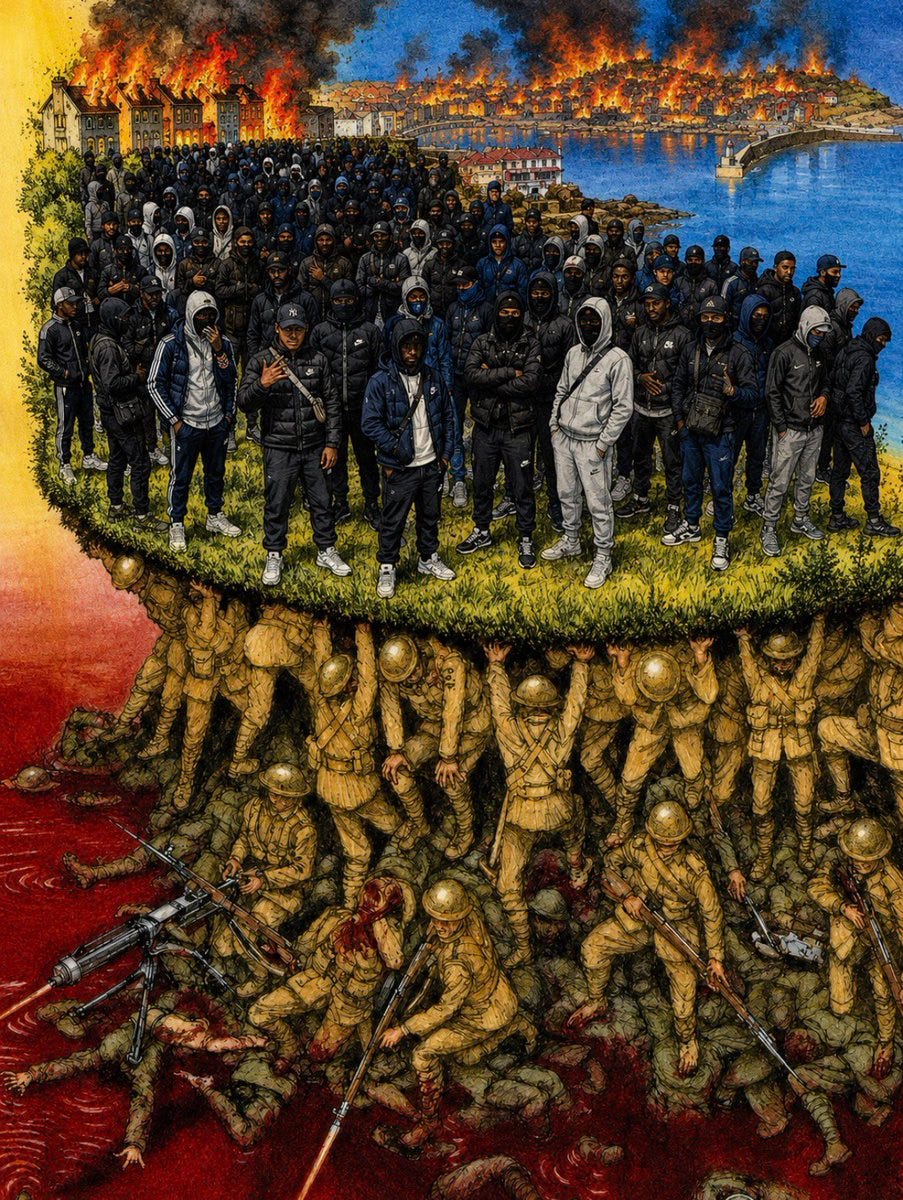
France is almost bankrupt and is wracked by cost-of-living and race riots. German industry is being starved to death by energy sanctions on its formerly reliable cheap energy supplier.
The future political leadership of these nations will seek peace and rebalancing of relations with Russia as otherwise, “Europe” dies.
4. NATO
It is remarkable that after nearly eighty years of membership of the “defensive alliance” of NATO that Britain and Europe are incapable of defending their own borders.
Mass migration has been magnified to its current scale in large part by the NATO-aligned wars in Iraq, Afghanistan, Syria and Libya. Should a new round of destruction be secured by the peace-imperilled Netanyahu, Europe may see tesn of millions of migrants flee the Gulf states.
The second greatest military power behind the US in NATO is that of Turkey, which has been judicious in using the release of millions of migrants into Europe to increase its strategic leverage.

This summer, Turkey agreed a new security deal with the Pakistanis whose “strategic ambiguity” may include a regional nuclear umbrella provided by Pakistan.
Turkey has faced repeated threats of a near future war from the regional ally of the United States, which is Israel7.
NATO, like the EU, faces an uncertain future. The map provided by the old dispensation no longer corresponds to the territory.

New priorities
If the national interest does not displace that of internationalist agendas many nations in the West will not survive.
The existential threat to nations at war is now shared by those whose states prosecute them. The wars have been suicidal for the West.
We do not have to live like this, and one way or another we won’t.
You are not obliged to break down along with the international death machine.
If you would like to help your friends adjust to reality, you can send them my work here:
If you think my work is worth paying for, you can do that here, too.
God bless you all and do not despair. Stay sane, and help others where you can.
Heads of state have been murdered, their negotiators assassinated, their nations collapsed by “liberal interventionism”. The result has not been the “nation building” promised in Afghan and Iraq. Shock and awe has not secured rapid dominance, as the book on the method stated. Regime change and its consequences have been a disaster for the human race.
See the remarks of the Foreign Minister of Oman, who was leading talks with Iran on the nuclear issue. Around the same time, JD Vance was suggesting Iran was developing nuclear suicide vests.
Truth is treason in an empire of lies of course, but the significant difference between the Israeli press and its picture of events to that produced by Western outlets is only visible if you see these reports.
I did, and that is why I was guilty of being right too soon.
Last month JP Morgan halted its analysis of the impact of the Iran war, as the situation is simply too unstable to reliably model. This is not a good sign.
The Sauds are a Sunni dynasty. The religion of Iran is predominantly Twelver Shiism. The “Houthis” in Yemen are Zai’idis, a Shia sect which emerged in the 1990s to defend the interests of this significant regional religious minority.
“Houthi” Islam is distinct from (if adjacent to) that of the Iranian (and Iraqi) Shia populations. Sunnis typically consider all Shia to be heretics. If, like the house of Saud, you are a perceived Sunni dictatorship whose national security relies on oil underneath your enemies in your own borders, and are losing a war against their de facto allies, your position seems less than certain to put it mildly - especially when it relies on a diminishing US security umbrella.
There are an estimated 20-50 million Christian Zionists in the US, being largely evangelical Protestants. Support has plummeted amongst the younger generation of this core cohort, as well as among “Gen Z” generally - signalling a “major, major, major generational problem” for future US-Israel relations according to ADL leader Jonathan Greenblatt.
“The issue of the United States’ support of Israel is not left and right.
It is young and old”.
Greenblatt said this in November 2023, warning of a near future in which unconditional support for Israel by the USA will no longer be maintained. It is unlikely this will be reversed.
Turkey has been described as a new Iran by the Israelis. Netanyahu has called Turkey an “enemy” of Israel and various reports and statements frame Turkey as a threat to Israel.
Will we ever have peace on Earth? Ever wondered what we have really been fighting over for millienia?
I have attended a non-denominational church for the last six years. It is Evangelical, Pre-Trib Rapture, Dispensational and Zionist. In my young adult years I was exposed to Hal Lindsay's book The Late Great Planet Earth and Tim LaHaye's series of books: The Left Behind series. In various other places such as with TV evangelists I encountered the same type of theology as the church I write of espouses. I did not know the history of Dispensationalism until recently. At this point I have done some reading about Dispensationalism and how there seems to be a weird connection between it and Zionism and the creating of the State of Israel in 1948. I started to question things when I became aware of Israel seeming to own our politicians, control our government and our Presidents and get us into wars killing other people for them, the Israelis. I have read about Trump's long history of connections with rich people of the tiny hats, his daughter and son-in-law and the weirdness of all that. I've seen many, many pictures of American politicians and men of renown caressing and fondling that WALL over there in that special, chosen little country and thought it so odd. I've read about who many people believe really brought down those New York buildings and who killed Mr. Kirk. I know who I think controls our world and so forth. I have been reading about THE NOAHIDE LAWS, seen photos of our various Presidents signing papers in their office, surrounded by a gaggle of Chassidic Jews proclaiming "Education Day" to honor the long-dead Rabbi Schneerson. Today I watched a video exposing how government school textbooks are being affected by those particular chosen people and how curriculums are changing to get our school kids thinking right about that country and those people. I just don't think Americans are paying enough attention to a lot of things in a lot of areas that they should be paying attention to.