

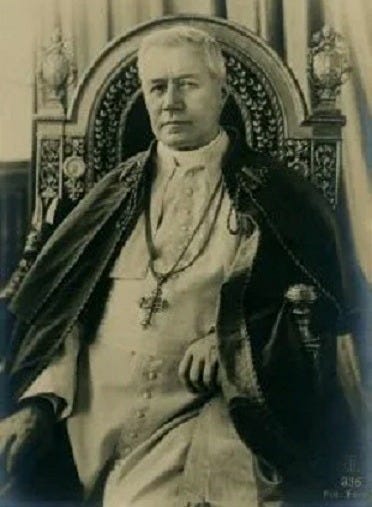
In this series I hope to do two things: to introduce the reader to Pascendi Dominici Gregis, and to compare the errors it condemns with the teachings of the Vatican today.
Transcribed as “A Catechism of Modernism”, Pascendi is the masterpiece of Pope St. Pius X.

It explains, in precise detail, the nature and origin of the errors of modernism which Pius X said threatened to replace the Catholic faith with a “One World Church”.
In this series I invite the reader to compare and contrast the work of Pope St Pius X to the teaching of the Synodal Church today.
The result is an education with real life examples in the errors of Modernism.
Our lives are an education in ignorance, since the Modern world is near total in its domination.
To read the works of the Great Popes is to see beyond the limits of the prison into which Man has been liberated - and thereby to escape it.
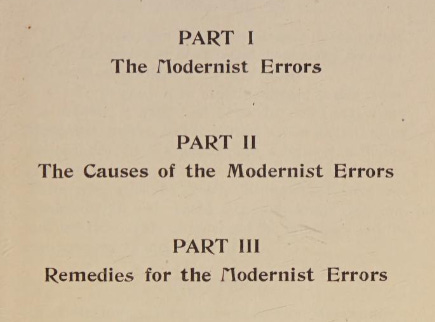
THE RELIGIOUS PHILOSOPHY OF THE MODERNISTS - PARTS 6 - 9
In part one we looked at the opening five sections of Pascendi Dominici Gregis, transcribed as a Catechism on Modernism. These parts explained the basic errors of the Modernist concept of religion.
This catechesis in Modernism showed how the Modernists aim to reduce the origin of religion to the senses of Man, replacing the Divine deposit of faith with feeling.
This produces a religion of sentiments, which is person-centred. It is a humanist idea of religion which is essentially agnostic, as it is founded on the assumption that Man cannot know God through means of Reason nor Revelation.
With Modernist religion being a matter of personal sensation, it follows that the Modernists will seek to alter the practice of religion according to the sensibilities of the time.
Today we will consider what it means to reduce religion to sentiment, how this denies the truth of the Catholic faith, and inevitably leads to the changing of the teachings of the Church into a litany of errors.
CONTENTS
What is a “religion of sentiments”?
Part One, Section Six of a Catechism on Modernism - The Origins of Religion
PAYWALL
What is “Synodality”?
Part One, Section Seven of a Catechism on Modernism - The Intellect
Part One, Section Eight of a Catechism on Modernism - Dogma
Part One, Section Nine of a Catechism on Modernism - Variability of Dogma
Analysis: The Reality of Synodality - Changing Catholic Dogma
Conclusion: The New Religion is a litany of errors
What is a “religion of sentiments?”
Some of the passages in Pascendi are challenging. This is because encyclicals from this time were concerned with precision. As such, the treatment of the origin of religion deals with philosophical - mainly metaphysical - concepts to show how and why Modernism is wrong, and to demonstrate the logical conclusions which proceed from its foundational errors.
This post is long because what Pascendi tells us is of vital importance to the salvation of our souls.
I also include passages from Pope Leo XIV and the leader of the Synodal Church Nathalie Becquart so the reader may compare these statements with those made by Popes St Pius X, Leo XIII and Pius XII.
PART ONE - SECTION SIX - THE ORIGIN OF RELIGIONS IN PARTICULAR

The sixth section of Part One discusses the Modernist idea of the origin of religion.
It begins with the above passage.
Section six shows how the Modernist deletes the supernatural - which is God - in saying religion is a timeless form whose existence is simply natural.

Of course, this reduces all religions to mere symbol systems, making them equally false.
This is called “naturalism” - the view that the world and everything in it has a non-spiritual origin - including religious belief.

It is for this reason that those who hold these views are condemned - or were condemned - by the Church.

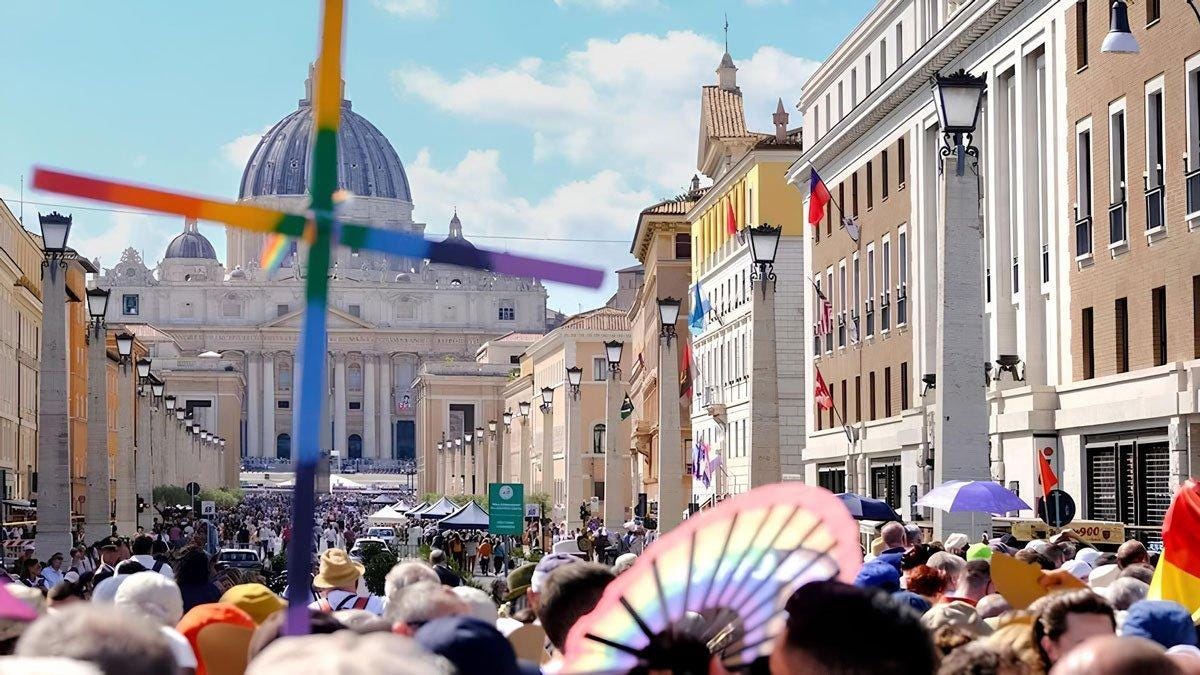
The charge is made that Synodality is a religion of sentiments. You can now understand what is meant when theologians say this. It is to say that the person-centred ethos of Synodality -the new way of “Being Church” - is anathema.
That is to say, Synodality is not the Catholic religion.
These Monday posts are paywalled in recognition of those subscribers who pay me to write them.
If you would like to learn the teachings of Pius X on Modernism and cannot pay, send me an email saying SKINT and I shall give you a complimentary pass.
frankwrighter@pm.me
