

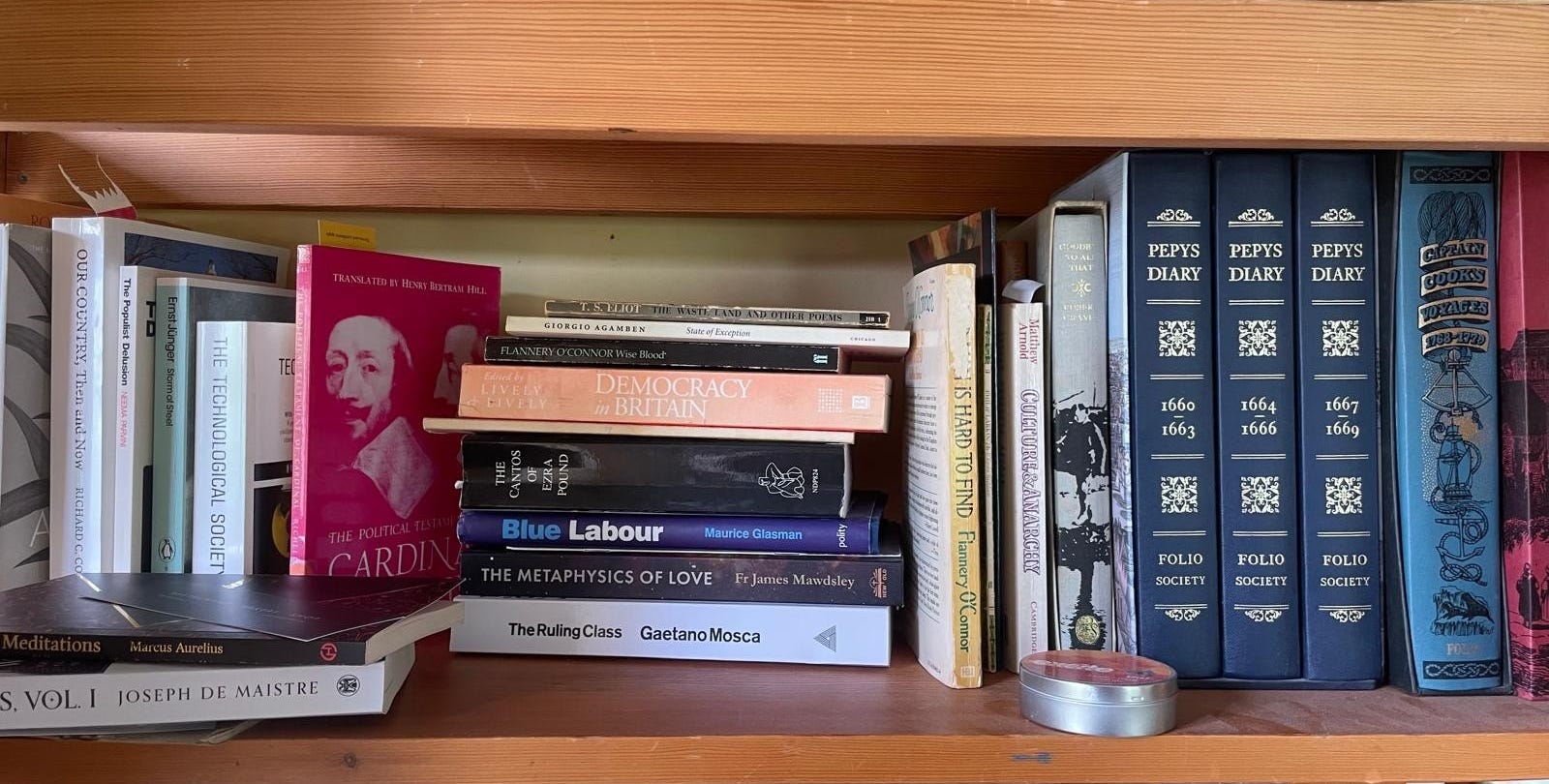
I have been asked lately to produce a book list, as I talk about books rather a lot.
Here are a few you may not of heard of which I have found have helped me in different ways.
How to order your life
Life is a madhouse these days and it is hard to make sense of it.
This book is the best exegesis of the cause, effects and remedy to the omnicrisis of modern life I have ever read1.
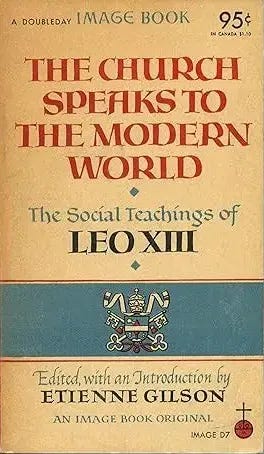
If you are not a Catholic, if you are not a Christian, if you do not believe in God - hold your nose and try to read it.
It is the most remarkable summary of the errors in human thinking, morality, economic injustice and the abuse of State power I have seen.
It is the kind of book that educates you far beyond your expectations. It is challenging, but it is only when we try to do what we cannot, without fear of the inevitable failure, that we overcome our vain aversion to humiliation and learn.
As the Modern Church now speaks for and not to the world, have a look at what the Church said to the modern world as its “terrible beauty” was being born in the late 19th Century.
The Mad Cult of Liberalism
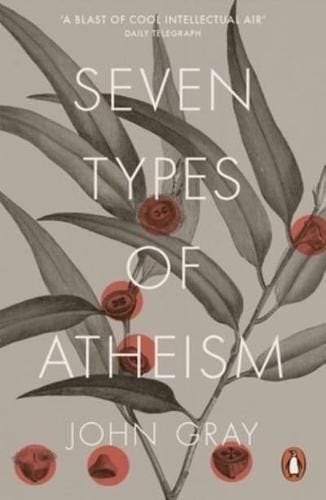
John Gray is the supreme critic of the Liberal idea. His “Seven Types of Atheism” isn’t really about that, though it does enumerate (and rather excoriate) what passes for the reflexive rejection of God these days.
Gray shows how an irrational cult belief in utopian progress and its false idols has replaced Christianity in a belief system so enchanting to its believers that they cannot recognise it is one.
A short book which will teach you more than you realised there was to know about the history of ideas.
The Myth of World War Two
The myths of the 20th century have been created to manufacture mass belief in the system which was reinstalled at its end - the liberal system we inhabit today.
AJP Taylor’s neglected Origins of the Second World War says there were no heroes at state level - only villains. His remarkable account of the war will undoubtedly revise your view of it, and what has been made up about it since.

I have this edition, which contains an introduction Taylor wrote for later editions. If you read nothing more of it, read that introduction. Stunning.
Practical wisdom
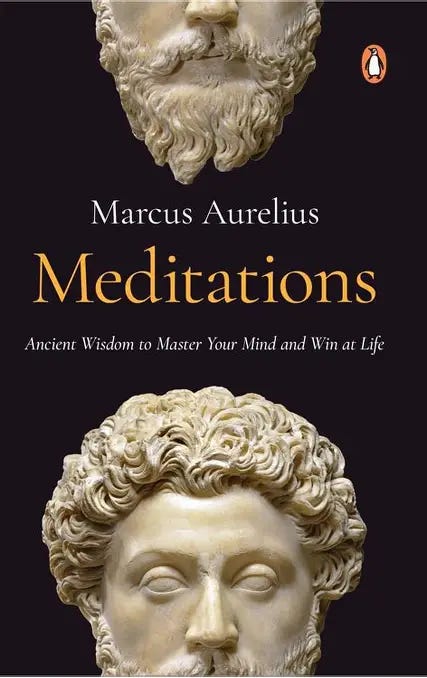
The nature of man is changeless and this is demonstrated in the work of Marcus Aurelius Antoninus and his mentor, Epictetus.
These two examples of what is called Stoicisim are full of practical advice at how to become less foolish and remain sane, whilst avoiding becoming a vain buffoon.
I have tried to be less bad for a long time and if you keep trying it works.
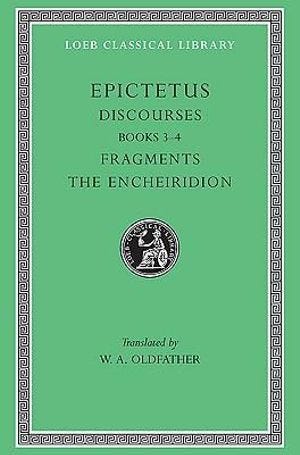
The Enchiridion is Epictetus’ “Manual” for life. He talks like a wise uncle you met last week. You will see parts of this and his other thoughts published as his Discourses.
The Meditations of Marcus Aurelius is a brief and bracing primer on the wisdom of self command. Very helpful in this febrile times, where everything we see is a sort of invitation to go insane for someone else’s profit.
How to read poetry
The best poet of the 20th century was Ezra Pound, who edited the work of the second best one, TS Eliot.
Pound’s ABC of Reading shows you, very simply, how to understand poetry and what it actually is.
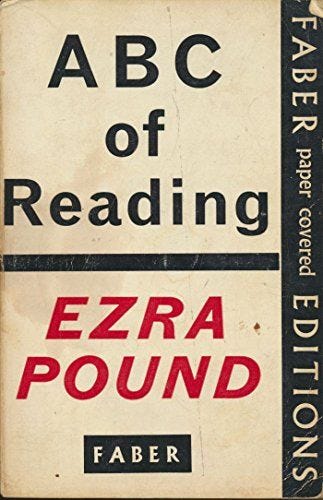
He tells you poetry is song, the organisation of words on the page, and the throwing of images upon the mind. Poems are made, he says, and he explains how.
No book I have read has kindled the beauty of poetry in me like this one. A treasure, from a master of the art.
What is civilisation?
The liberal system is a revolution to replace our civilisation. It has failed, but in doing so it has replaced so much of our lives with itself that we struggle to remember what we have lost.
![[PDF] Civilisation Download by Kenneth Clark](https://substackcdn.com/image/fetch/$s_!GQ9y!,f_auto,q_auto:good,fl_progressive:steep/https%3A%2F%2Fsubstack-post-media.s3.amazonaws.com%2Fpublic%2Fimages%2F85d227a0-af6d-415b-8621-2fd9e0c8feab_318x454.jpeg "[PDF] Civilisation Download by Kenneth Clark")
Kenneth Clark’s beautifully written and illustrated book is a wonderful account of what it is we have almost forgotten entirely. If you wish to understand the ruins which surround us, what they mean and where they come from, read his “Civilisation”.
The Counter-Revolution
As the rotten and often explicitly Satanic regime dissolves around us, we may wonder what it is we must do next - and how.
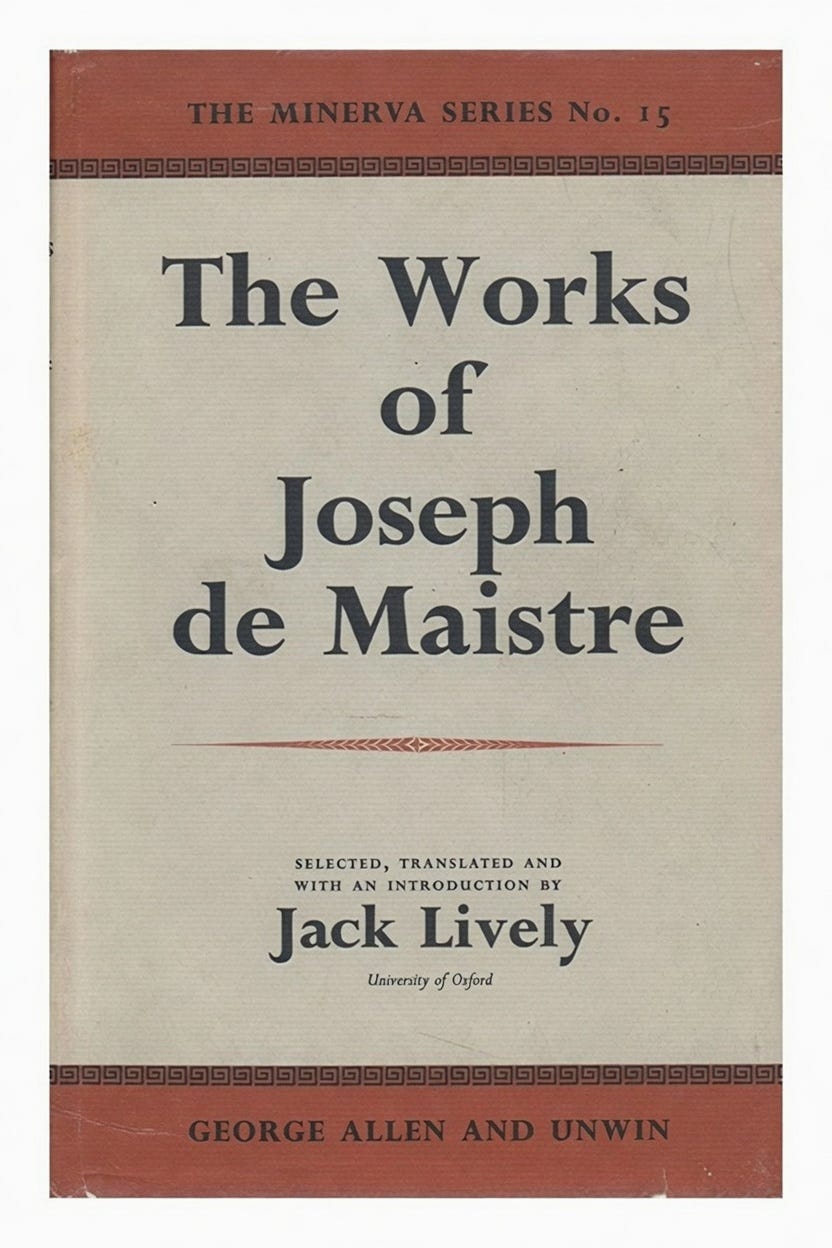
Joseph de Maistre lived through the French Revolution. His work is almost appalling to read these days, as it is the most vociferous and brutal appraisal of the limitations and changeless nature of man I have encountered.
If you read nothing more of his magisterial condemnation of the revolutionary idea and what it destroys in Man - as it falsely promises to liberate him - read his essay on The Executioner.
In a world driven mad by the revolutionary cult, De Maistre’s often hilarious diagnosis of the human condition comes as a profound shock.
Rather like plunging into a cold lake in summer, it is breathtaking to read De Maistre, but you feel electrified afterwards and full of vim. Brilliant.
Beauty Matters
Why beauty matters is a profound question, and the Four Quartets of TS Eliot are full of both.
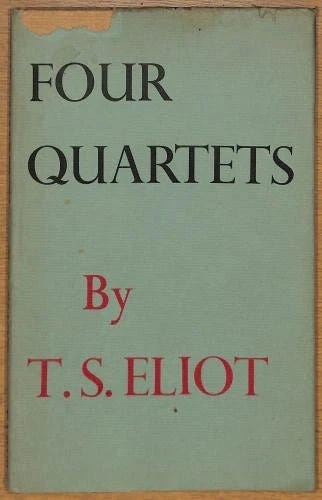
I would highly recommend Eliot’s poetry, as Prufrock is an almost unbearable portrait of the predicament of modern man - for example. His Notes Towards the Definition of Culture are also outstanding, showing for instance that there is no limit to the depths into which Man may fall if guided by his own designs alone.
My personal favourite is Burnt Norton. It echoes Aristotle, speaks of the Still Point, the landmark of human history that is Christ, and the fact that “human kind cannot bear too much reality”. There is the laughter of children in it, and it will speak to you of the door we did not open in all the time we had.
If you can bear the awesome beauty of the ultimate reality, this is the poem for you.
The Mad Cult of Modern Man
Finally, the most comprehensive account of the insanity of our world today which is found in the Catechism of Modernism of Pope St Pius X.
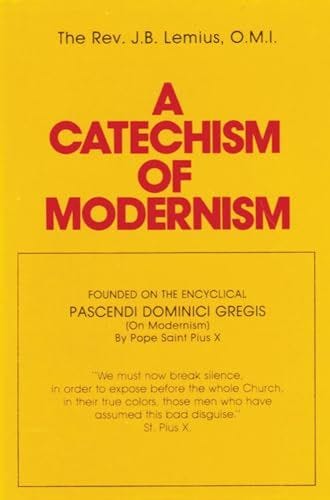
It is about how a religion of mankind has been created, which drives the world mad. It shows who made it, why, and predicted the terrible effects of the institution of a diabolical political cult and its elevation to the status of religion.
No book I have read gives a better account of the deluded limitations of modern philosophy and its disastrous consequences for the human race than this one.
Reading this identified the false idols my education in school and by society had installed in my mind, and it instructed me why they were false with a degree of philosophical rigour I have seldom encountered2.
A masterpiece of practical and spiritual wisdom which is an essential guide to the evil system which rules us today. But not for much longer.
I will return to expand My Reading List as I will inevitably remember some gems I have left out, in that privately anguished way we all do after the fact.
I hope you find these as useful to your understanding of your life as I have.
I have written a thirteen part series on the nine encyclicals in this book, which is a masterpiece of the example of sanity and justice in the organisation of human affairs, from self to state level. To my mind there is no better blueprint for a political economy which promotes human flourishing than is presented in these pages. And so much more.
You can read my series here.
I did a series on this book too. It is extremely difficult if you do not read philosophy, but it is written in a way which will give you an essential education which the liberal system has deliberately deprived you of ever having otherwise. Find some of the best counter-revolutionary ammunition there is within its pages.
Here is a preface to that series which also treats an excellent book on Liberalism.
If you support my work, thank you. If you would like to do so, you can do that here:
Frank, great list. I felt my brain cells starting to sweat just reading the titles and your perspectives.
Thank you very much. Those books you listed have certainly piqued my interest.
By the way, please keep up your support of Restore Britain. In the recent YouTube video of your interview you spoke very eloquently about the problems the country is confronting. It resonated so strongly with me and is what prompted me to visit you here on Substack.